Published: 01/29/2026
By Catherine Wu, Global Health Communications Assistant
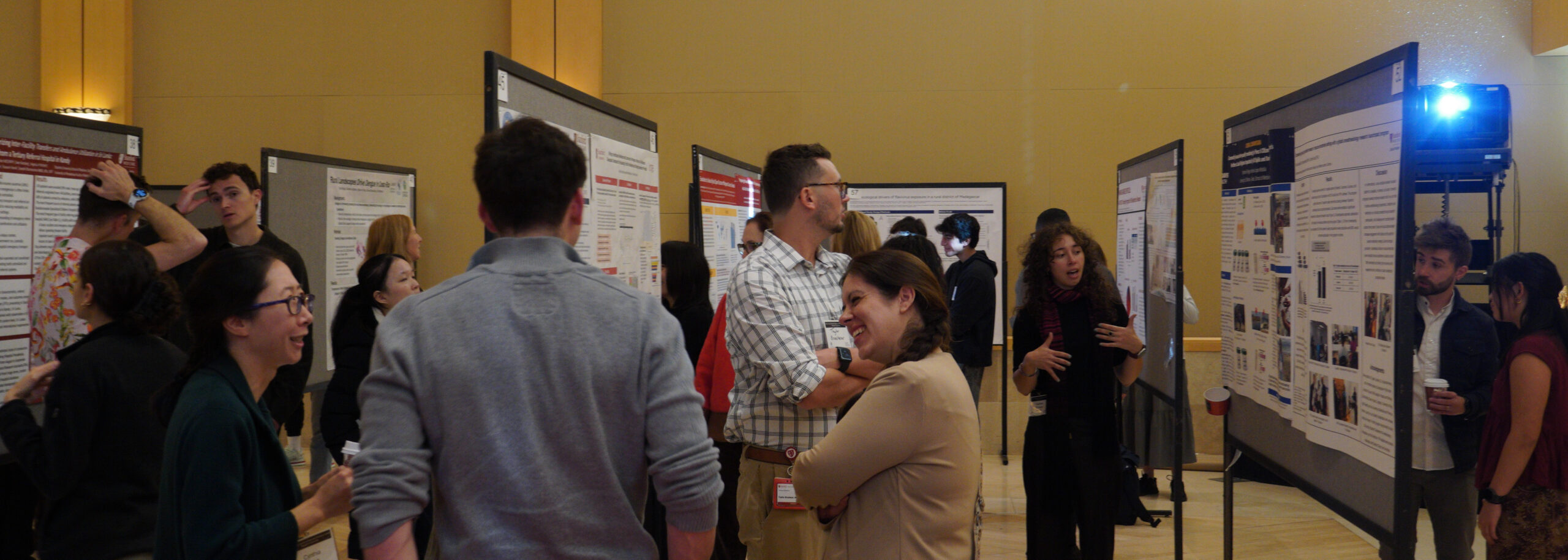
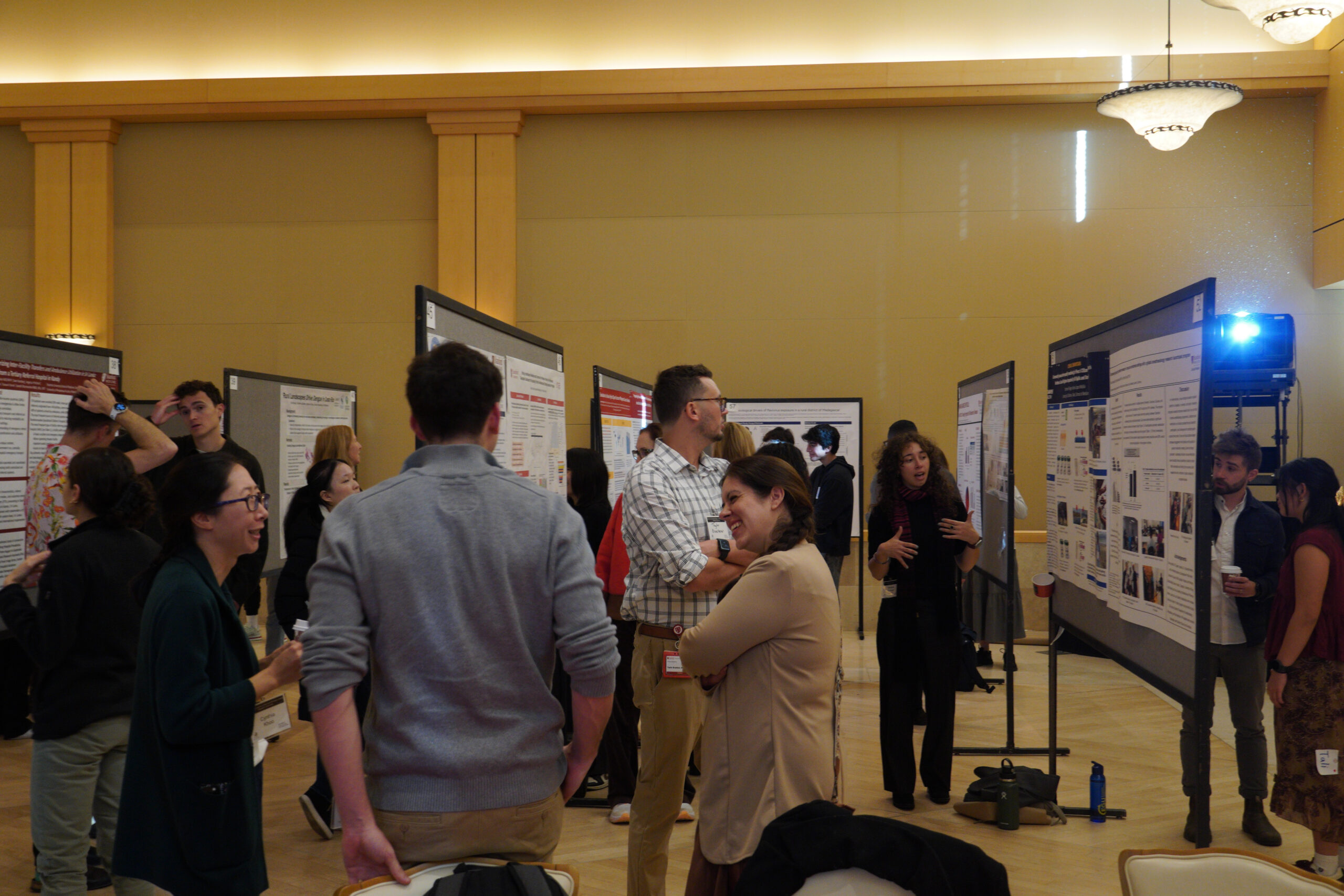
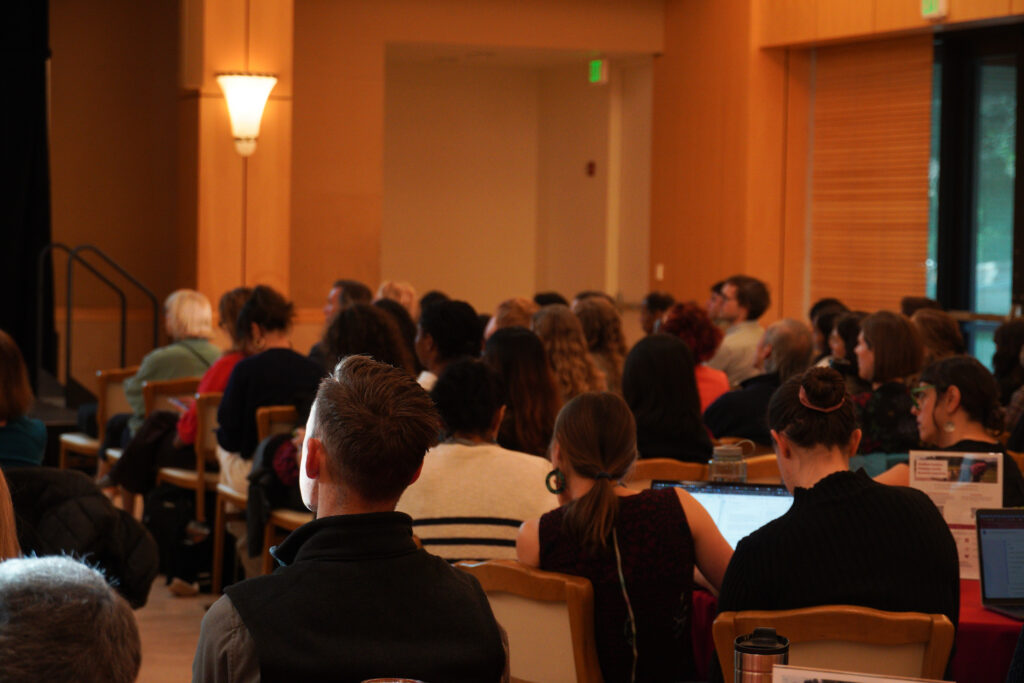
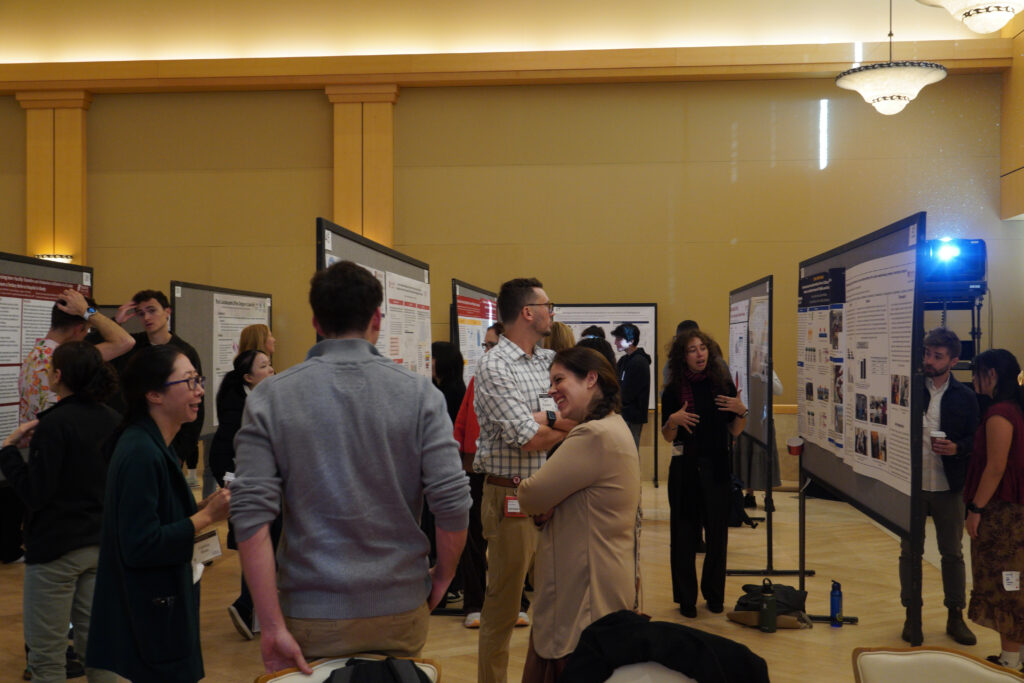
More than 400 researchers from Stanford and institutions across the nation and world came together to discuss their research at the 2026 Global and Planetary Health Research Convening. They shared their findings during oral presentations and lightning talks, discussed their process during poster presentations, and formed new connections with potential collaborators during lunch-time table talks.
Attendees represented a range of disciplines and educational levels, ranging from high school students to undergraduates, PhD candidates, postdoctoral researchers, and senior faculty.
Edward Apraku, PhD candidate in Environmental Engineering at Stanford, shared his research on “Circular Nutrient Recovery at the Nexus of Water, Energy, and Planetary Health.” His poster focused on three chapters of his dissertation, where he explored planetary health at the water-energy nexus with William Tarpeh, Assistant Professor of Chemical Engineering, by courtesy, of Civil and Environmental Engineering. “I’m looking forward to learning more about planetary health scholars across the world,” Apraku said at the convening.
Undergraduate student and President of the Undergraduate Global Health Club at Stanford, Max Yang, shared his research titled “Phylogeographic Reconstruction of Global and Regional Corridors of Tuberculosis Introduction in Latin America.” As an undergraduate student, still early in his career, Yang was especially excited to attend the convening and hear others “provide feedback and consider new ideas” for his lightning presentation and poster.
“It’s great that the global health and planetary health community at Stanford is so vibrant,” Yang continued, “where we can have this whole convening where we have faculty, staff, students, exchanging ideas about new advances in the field.”
Researchers from outside of Stanford, like William McCarthy, medical student in the global health concentration at the University of Texas Health Science Center at Houston McGovern Medical School, also shared the latest work from their home institutions. McCarthy’s research, in particular, grew out of a collaboration with Stanford University’s Manu Prakash, PhD. “I’m here to talk about One Health approaches to controlling schistosomiasis, a neglected tropical disease prevalent in Sub-Saharan Africa as well as Brazil,” McCarthy said at the convening. “I’m excited to talk about how human health and ecological health are intertwined and how we can try to approach both in a community-led way.”
From the University of California, Berkeley, Daniel Sitompul, M.Eng and B.Eng, and Rashmi Varma PharmD, MPH, presented their research on “Digital Monitoring for Health Facility Emission Prediction and Climate Finance: A Case Study from the Democratic Republic of Congo.” Using technologies like digital monitoring and auditing methodology, and integrating voltage and frequency sensing, Internet of Things (IoT) devices, and machine learning (ML), the two are working to quantify the emissions from generators in healthcare facilities across sub-Saharan Africa.
“I’m looking forward to meeting people from different domain expertise, from different disciplines, not only like medical professionals, but fellow engineers, all working towards planetary health and in the global health space,” Varma said at the convening. “I’m also looking forward to networking and learning from other people’s projects as well as having an opportunity to present ours and our research.”
Attendees from across disciplines also engaged in the convening to learn more about recent innovations in the field.
“It’s always fun to reconnect with colleagues in the global health community and hear about the latest work, especially from trainees and mentees,” said assistant professor of Epidemiology and Population Health Jade Benjamin-Chung.
Interested to learn more about the research presented at the convening? Review abstracts from the event here.